How a Michigan news service is succeeding without a paywall
By J. Cav Scott, Lab Reporter
Most people who reach a paywall give up and turn to another digital outlet with free news.
Paywalls can seem like a path to sustainability, but one Michigan news organization has found a way forward without subscription revenue. And it’s working.
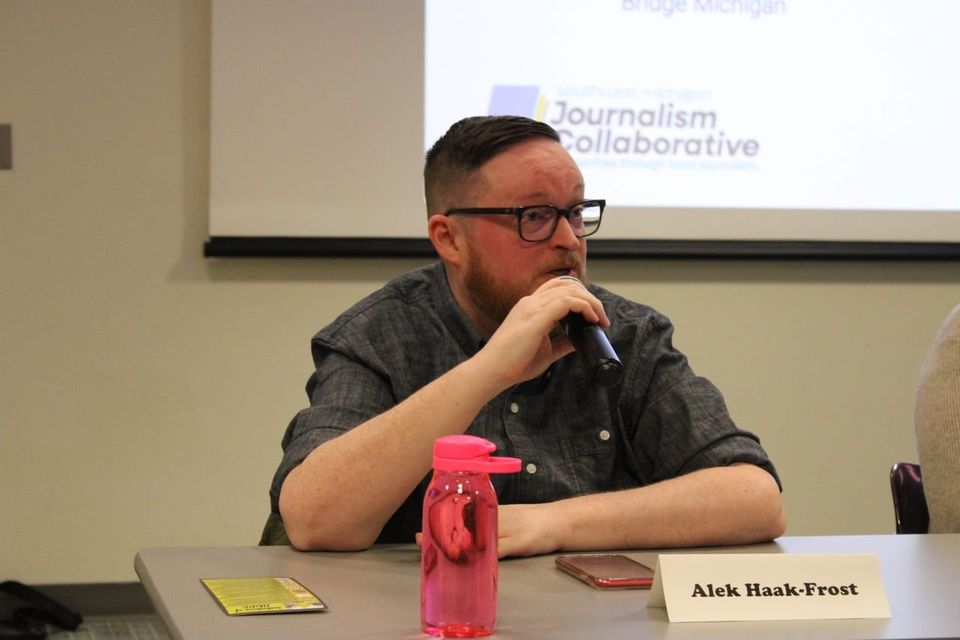
“I believe in equity and equality through access and making sure that folks, regardless of what their income level is, regardless of their station in life, if they can find a Wi Fi signal, they can read our news, and they can have the same information as everybody else,” said Alek Haak-Frost, who founded the Watershed Voice.
Since starting the southwest Michigan news site in 2020, the site won Lion Awards for local journalism, which Haak-Frost said brought credibility and the opportunity for grant revenue to the non-profit outlet.
He said the choice to go non-profit was central in growing the Watershed Voice.
“The only way you can do this now, at least in my opinion, especially in a smaller area, is if you open yourself up to every revenue stream, every avenue, which means grant funding, which means donations, which means major donors,” he said.
Haak-Frost said the process of creating the non-profit was well underway when the COVID-19 pandemic shut the world down.
“We had already built everything. We had people on payroll,” said the executive editor and publisher. “We had to go with it.”
At that point, the news service was still using a paywall and selling ads to keep the lights on. Faced with dwindling coffers and burn-out, Haak-Frost said the Watershed Voice was nearing its “last hurrah.”
But they were still awaiting decisions on two Lion Awards.
“We won both,” he said, “and that changed everything.”
The Watershed Voice won for both Public Service and Outstanding Coverage in the micro newsroom tier in 2022.
Haak-Frost said recognition from the awards opened up opportunities for the small outlet.
“Far before we got the recognition locally, we got it nationally,” he said.
He said the notoriety led to two major donations with $25,000 from the Sturgis Area Community Foundation and $22,000 from John Carmichael in 2023, and several more in the years since. He is grateful.
Haak-Frost said he thinks other news sites and independent journalists could use this model to succeed without paywalls.
“Start doing the news, that's as simple as it gets,” he said, adding that donations to cover basic necessities, good early content and organized presentation are helpful to get off the ground.
“Start small, publish once a week, and ask yourself, as a member of whatever community you're in, ‘What matters? What's not being covered? Who is underserved?’” he said, adding that their revenue model allows for total editorial control.
“You build that trust with the community, because they go, ‘these people have a certain standard, and they have a certain commitment to doing things the right way,’” he said.
“The ability to pursue leads and dig into stories without a corporation looking over your shoulder cannot be overstated. A newsroom can be ethical and treat its reporters well, but there is still a fundamental difference when journalists never have to wonder whether a corporate interest, advertiser, or distant executive might influence the work,” said Maxwell Knauer, who writes for the Watershed Voice.
“Our success depends on whether readers believe our work is valuable, so we have no choice but to produce journalism that is honest, informative, and useful. We answer to the people who support us, not to a corporation,” he continued.
Haak-Forest said if he were to do it all over again, he would have approached creating a news outlet differently.
“I would have started smaller, and I would have foregone the paywall,” he said. “I would have touted accessibility and commitment to a community.”

Like what you read?
We're building a movement for greater trust in journalism, rooted in emotional engagement of audiences. If this resonates with you, please forward this to a colleague or friend who cares about the future of local or community news.
For additional practical steps, check out the Successful Journalism One-Sheet Guide. New journalists, please see the Lab and Journalism Basics pages.
Together, we can create journalism that communities believe in.