He wrote the book on negativity. He sees an opening for the positive.

By Doanh Tran, Lab Reporter
The headlines are often dire: Israel and Hezbollah trade strikes. A student tells police, “I can’t breathe.” And is Hantavirus the new Covid? Animals are dying. People are dying. And it all captures our attention.
“We all fear the same things,” said John Tierney in an interview with Successful Journalism for Communities. “The easiest way to get a mass audience is negativity,” he said. But does it have to be that way to reach a journalism audience?
Tierney is a contributing editor for the right-leaning City Journal. He previously served as a reporter and columnist at The New York Times, and co-authored The Power of Bad: How the Negativity Effect Rules Us and How We Can Rule It. The book, written with Roy Baumeister, focuses on "negativity bias," the human tendency to react more strongly to bad things than good ones, which evolved within us for survival but distorts modern life.
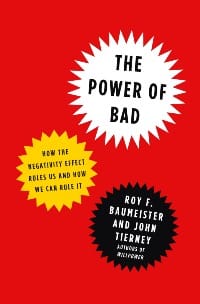
We are drawn to the negative. And yet, this site, Successful Journalism for Communities, has argued that some forms of positive news can help offer a path to journalism sustainability. Asked about this, the author of The Power of Bad acknowledged the power of good: “Scary tweets get retweeted more quickly, but they don’t actually spread as widely. And there's evidence that if you're positive on Facebook and on Twitter, you actually get more followers.”
Research shows exposure to negativity is harmful to adults’ mental health: it drastically increases anxiety and decreases mood compared to neutrality or positivity.
The negativity bias, made worse by the tendency of “prophets of doom” (a.k.a. journalists) to “continually foment fears,” have “profoundly distorted the public's view of the present and the future,” according to the book.
But when asked if he’s hopeful, Tierney said, “Yes, I am, actually.”
“People on Facebook don't share photos of school massacres,” he continued. “That's not what you show your friends. People tend to pass on [things like,] ‘Here's some nice news. Here's a beautiful photo.’
He added, “So I think there’s some hope for positivity here.”
Also, he noted, he reads his own neighborhood’s local newspaper.

Like what you read?
We're building a movement for greater trust in journalism, rooted in emotional engagement of audiences. If this resonates with you, please forward this to a colleague or friend who cares about the future of local or community news.
For additional practical steps, check out the Successful Journalism One-Sheet Guide. New journalists, please see the Lab and Journalism Basics pages.
Together, we can create journalism that communities believe in.